What is a dress code, and how formal is each one?
A dress code is the host's shorthand for how dressy the event will be. It saves guests from guessing and keeps the room looking coherent in photographs. The terms come mostly from English, and many invitations around the world use them unchanged.
It helps to see them as a ladder, from the most formal at the top to the most relaxed at the bottom. Once you know where a term sits, you know the length, the fabric and the amount of shine that fit.
- White tie: the strictest code, a full-length gown, rare today.
- Black tie: a floor-length evening dress.
- Black tie optional: long preferred, a very dressy midi accepted.
- Elegant, formal or festive: dressy, between cocktail and black tie.
- Cocktail: knee-length or midi, polished and party-ready.
- Smart casual: neat and simple, no gown, no heavy sparkle.
What does black tie mean for women?
Black tie means a floor-length evening dress. The look is elegant and finished: a gown in a fabric with weight or sheen, heels or dressy sandals, fine jewellery and a small clutch. Hair and make-up are more polished than for a dinner out.
Silhouettes with presence work best — a mermaid that flares below the knee, a long A-line, a straight cone or column line, a strapless or boat-neck bodice. Deep colours, black and jewel tones are classic; sequins and embellishment are welcome in the evening.
What to avoid: short dresses, daytime cotton, casual sandals, large everyday bags and anything that looks like you came straight from the office. If the invitation says white tie, go even further: a full-length gown, the most formal jewellery you own and, at the most traditional events, long gloves.
What does black tie optional mean?
Black tie optional means the host would like guests to dress for a black-tie evening, but accepts a slightly lighter version. For women, a long dress is still the best choice; a very elegant midi or a refined cocktail dress in a rich fabric also works.
The difference from black tie is flexibility, not casualness. Keep the shine, the heels and the polished accessories. Avoid short party dresses with a casual feel, daytime fabrics and flat everyday shoes.
What does cocktail attire mean?
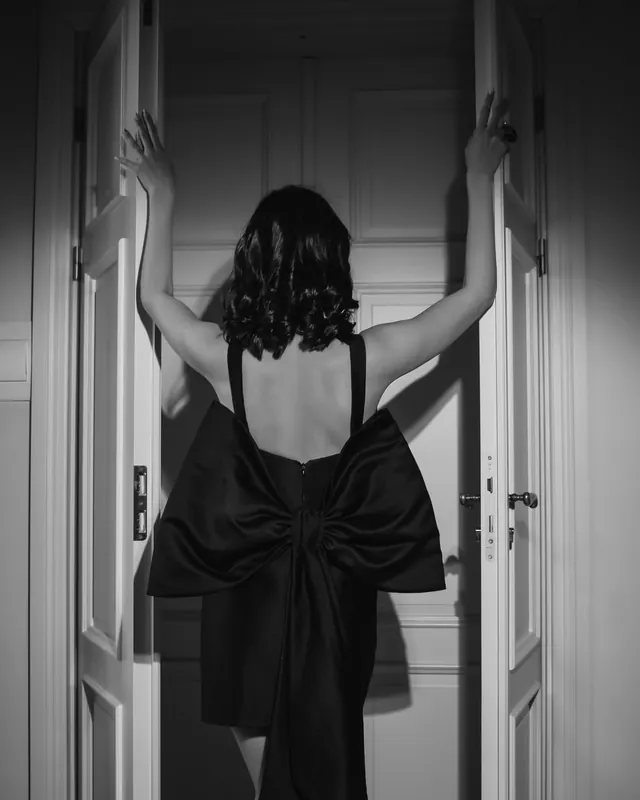
Cocktail attire means a dressy dress that ends around the knee or at mid-calf. Think of a party dress that would also look right at a smart reception: a structured mini, a midi with a bow, a fitted pencil cut or a strapless bodice with a defined waist.
This is the dress code where details can shine — a statement bow, a brooch, a belt with sparkle, feathers or a bold colour. Heels or dressy sandals and a small bag complete the look.
What to avoid: a full-length gown, which can look overdressed, and anything that reads as beachwear or clubwear. A mini should still feel polished rather than revealing.
What do elegant, formal or festive mean on an invitation?
These words are less precise than black tie or cocktail, and their meaning shifts from country to country. In most cases elegant or formal means dressy: a long dress or a refined midi, quality fabrics and heels. It sits between cocktail and black tie, so read the time and the venue for the final answer.
Festive usually appears on holiday parties and celebrations. It invites colour, sparkle and a sense of fun: a red dress, a metallic accessory or a playful bow. The length follows the hour — a midi or mini for an early party, a long dress for a late dinner.
See red dresses for festive evenings →
What does smart casual mean for an evening event?
Smart casual means neat, simple and well put together, without the full ceremony of evening wear. For a woman, a plain midi or knee-length dress, a fitted dress with a blazer or a simple skirt and top all work. Flats, loafers or low heels are fine.
What to avoid: a gown, heavy sequins and towering heels, as well as anything worn-out, sporty or beach-like. Smart casual is relaxed, but it still says you made an effort.
What should I wear to a gala, a prom or a graduation ball?
A gala is usually black tie or close to it, so a floor-length dress is the safe answer unless the invitation says otherwise. Charity galas and award nights are an occasion for a strong silhouette and a single statement detail.
A prom or a graduation ball depends on local tradition and the school. In many places long dresses dominate; in others short dresses are just as common. Whatever the length, choose a dress you can dance in for hours and shoes you have already broken in.
- Gala: floor-length, rich fabric, fine jewellery, clutch.
- Prom or graduation ball: long or short by tradition, comfortable for dancing.
- Awards dinner: black tie unless stated otherwise.
- Charity ball: follow the invitation; when in doubt, go long.
What should I wear to a company party, the opera or the theatre?
A company party usually means cocktail attire, even when the invitation says nothing. Choose a midi or a polished knee-length dress, keep the neckline and hemline office-friendly, and check whether there is a theme. Remember that you will see your colleagues on Monday.
Unless the theatre or the invitation states a dress code, an evening at the opera or the theatre is relaxed today, but opening nights, premieres and galas are traditionally dressier. An elegant midi or a long dress fits these evenings. Skip noisy accessories and large hair ornaments that could block someone's view.
Which Bae dresses match each dress code?
Bae's evening and cocktail line covers both ends of the ladder. For black tie and galas, look at the maxi lengths: a deep burgundy strapless mermaid maxi with a camellia brooch (Glory), a strapless cone maxi with a draped tulle top (Gigi) or a black strapless A-line maxi with diamanté (Eve).
For cocktail parties and company events, the minis and midis work best: a black strapless pencil midi with a rose cape bow (Kira) or a powder-pink boat-neck mini with a diamanté belt (Lara). The seller's website is in English with prices in euros, and you choose your size by the size chart on each model's page.
 What to wear to a wedding as a guest
 How to choose a wedding dress