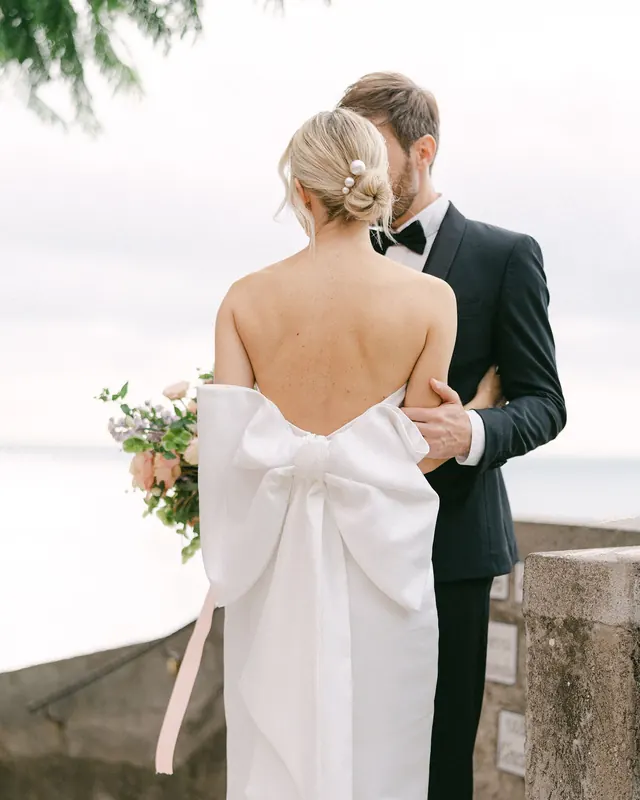
When should I start looking for a wedding dress?
Start looking several months before the wedding. Six to nine months gives you room to explore ideas without pressure; if you are buying a ready-made dress online, two to three months before the date is a workable minimum.
The calendar fills up faster than you expect. Behind every dress are delivery, a try-on at home, a possible return and new order, and one or two fittings with a tailor. Some models are made available on pre-order, which adds waiting time before dispatch. Working backwards from the date is the easiest way to see how much time you really have.
Which wedding dress silhouette suits my figure?
The right silhouette is the one that flatters your shape and lets you move the way you want to on the day. Try on several shapes, even ones you think you will not like — many brides are surprised.
Whatever you choose, test it properly: walk, sit, lift your arms and imagine hugging your guests. A dress that looks beautiful standing still but stops you from dancing will feel long by midnight.
- A-line: fitted at the bodice, the skirt flares gently from the waist. Flattering on most figures and easy to move in.
- Cone, column or sheath: one long, straight line from bodice to hem. Elongates the figure and suits minimalist styles.
- Pencil: close-fitting down to the hem. Highlights curves; expect shorter steps.
- Mermaid: fitted to the knee, then flaring out. Dramatic and sculptural; check that you can sit and climb stairs.
- Mini or midi: light, modern and practical for a civil ceremony or a second look.
Which dress suits the venue and the type of ceremony?
Match the dress to the place first, then to your taste. A church or other religious ceremony often calls for a long dress and covered shoulders; a bolero, a cape or a veil lets you respect that and still wear a strapless dress for the party.
A garden, beach or vineyard wedding favours lighter shapes without a heavy train: a cone or pencil maxi, or a flowing A-line. A ballroom or an evening reception in a grand hall can carry more drama — volume, a strong neckline, a statement bow. For a small civil ceremony, a short or midi bridal dress looks unmistakably bridal without the weight of a gown.
Civil ceremony or church wedding: do I need two dresses?
Not necessarily. In many countries the civil registration and the religious ceremony take place on different days or in different places, and brides handle this in different ways.
Some wear one long dress for both and add a bolero for church. Others choose a short or midi bridal dress for the town hall or registry office and keep the long gown for the church. If the civil ceremony is a separate, smaller event, a short wedding dress is often the most comfortable and photogenic choice.
Should I plan a second look for the evening?
A second look is worth it if your ceremony dress is long, structured or heavy. Changing into a mini or a midi after the first dance lets you sit, eat, dance and hug guests without managing a train.
Choose the second dress so that it feels related to the first: the same white or ivory tone, a similar neckline or a shared detail such as a bow or tulle. It should look like a continuation of the story, not a different bride. A short bridal dress also works for a rehearsal dinner, an engagement party or a farewell brunch.
How do I order a wedding dress online without stress?
Order early and treat the first delivery as a try-on, not the final step. Before you pay, measure your bust, waist and hips and compare them with the size chart on the model's page. If you fall between sizes, think about which part fits closest — a strapless bodice or a pencil skirt is less forgiving than an A-line.
Check whether the model is in stock or on pre-order, and look at the delivery time for your country. When the dress arrives, try it on with your wedding shoes and underwear, in good light, and keep the tags and packaging until you are sure.
Plan alterations only after you have decided to keep the dress. A dress that has been altered is no longer new and in its original condition, so return terms usually no longer apply.
Browse all Bae occasion dresses →
Which accessories complete a bridal look?
Choose accessories after the dress, and let one element lead. If the dress has a bold bow or a dramatic neckline, a simple veil and small earrings are enough; if the dress is minimalist, a cathedral veil or a statement piece of jewellery can carry the look.
Buy your shoes early and wear them at home so they are comfortable by the day. Bring them to every fitting — the heel height decides the final hem length.
- Veil: match its length and edge to the dress; a long veil suits a church aisle.
- Shoes: comfortable, broken in, the same heel height at every fitting.
- Bolero, cape or gloves: for a church ceremony or a cool evening.
- Underwear: chosen for the neckline, worn at fittings.
- Jewellery and hair accessories: one statement piece, the rest discreet.
What does a wedding dress timeline look like?
A simple timeline keeps the dress from becoming a last-minute worry. Adjust the months to your date, but keep the order of the steps.
- 6–9 months before: collect ideas, set a budget, confirm the venue and the type of ceremony.
- 4–5 months before: shortlist silhouettes, take your measurements, look at pre-order times.
- About 3 months before: order the dress, and a second look if you want one.
- On delivery: try it on with your shoes and underwear; decide within the return window.
- 4–6 weeks before: fittings and alterations with your tailor.
- Final week: steam the dress, pack an emergency kit, give the dress to someone you trust.
Where can I see Bae wedding dresses?
Bae's bridal collection covers most of the shapes in this guide. Among the long dresses are strapless cone maxis with a tulle top, such as Calla and Grace, strapless A-line maxis with a cape bow or a rose cape bow, such as Eve and Salvia, a square-neckline pencil maxi with a bolero (Ida) and a strapless ruffled maxi with a fleur bolero (Étoile).
For a civil ceremony or a second look there are short styles: a strapless mini with a tulle skirt (Juno) or a strapless midi with a cape bow (Mia). Prices at the seller start from about €440 and may change. You order and pay online on Bae's website, which is in English; delivery within Europe takes 2–5 working days under the seller's terms, and returns are accepted within 28 days of delivery for new, unworn items with tags and in their original packaging.
 What to wear to a wedding as a guest
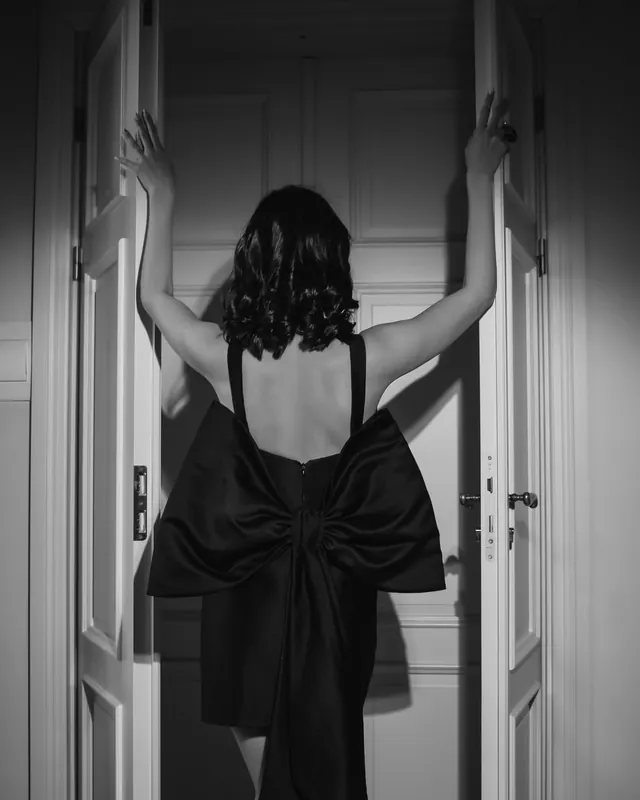 Dress codes explained: what the invitation really means